

 November 20, 2026
 2 min read
You are applying for mechanical engineering jobs every day, checking new vacancies, submitting applications and waiting for recruiters to contact you. You may have already applied to 20, 30 or even 50 jobs, but still have not received the interview calls you expected. When this happens, it is easy to assume that the problem is the job market or that companies are not hiring enough mechanical engineers.
But before applying to another 50 jobs, take a closer look at your resume.
Your resume is often the first thing a recruiter uses to understand your education, technical skills, experience, projects and suitability for a particular position. If your resume does not clearly communicate why you are relevant to the job, your application can be overlooked even when you have the required qualification or technical knowledge.
This is especially important for mechanical engineers because different engineering roles require different skills. A Mechanical Design Engineer may need CATIA V5, SolidWorks, GD&T and 3D modelling, while a Production Engineer may need manufacturing processes, CNC, production planning and process improvement knowledge. Quality roles may focus more on inspection, quality tools, root cause analysis and engineering drawings.
If you are using one generic resume for every vacancy, it may be one of the reasons you are not getting enough interview calls.
Here are 7 common resume mistakes mechanical engineers should identify and fix before applying for their next job.
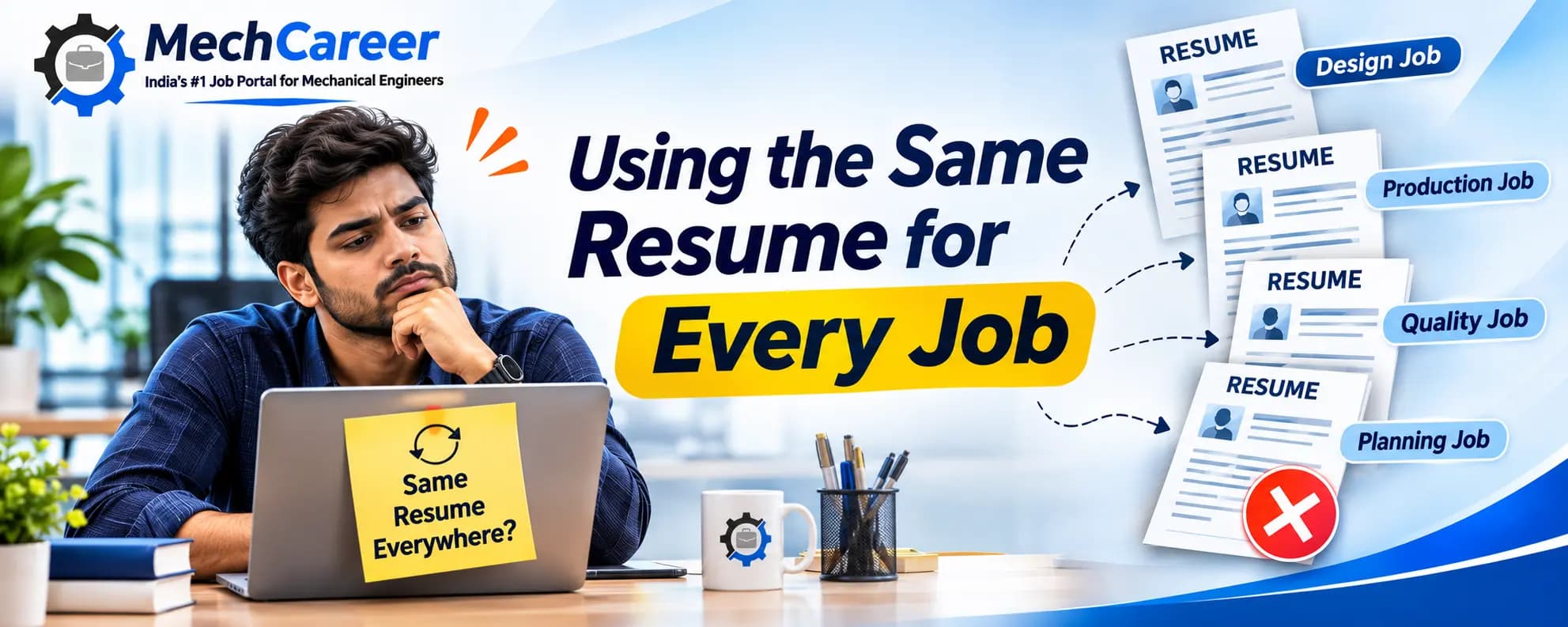
Using the Same Resume for Every Job
One of the biggest mistakes job seekers make is using exactly the same resume for every job application. A candidate may create one resume containing CATIA V5, SolidWorks, AutoCAD, CNC, manufacturing, production, quality and GD&T and then send that same document to every company. Although this saves time, it does not necessarily show the recruiter that your profile matches the specific position.
Different mechanical engineering jobs have different requirements. A Mechanical Design Engineer vacancy may focus on CAD software, 3D modelling, assembly design, engineering drawings, GD&T and product development. A Production Engineer position may place greater importance on manufacturing processes, production planning, CNC operations, shop-floor activities and productivity improvement. A Quality Engineer role may require knowledge of inspection, measuring instruments, quality tools, root cause analysis, PPAP or APQP.
This is why you should customise the important parts of your resume according to the job description. You do not need to create an entirely new resume for every company. Instead, maintain a master resume and adjust your professional summary, technical skills, relevant projects and experience according to the position.
For example, if you are applying for a design position that specifically requires CATIA V5 and GD&T, your CATIA projects, 3D modelling experience, engineering drawing knowledge and relevant design skills should be clearly visible. If you are applying for production, the resume should give greater importance to manufacturing, CNC, production planning, quality and process improvement experience.
The goal is simple: The recruiter should quickly understand why your profile is relevant to that particular job.
Using the Same Resume for Every Job
One of the biggest mistakes job seekers make is using exactly the same resume for every job application. A candidate may create one resume containing CATIA V5, SolidWorks, AutoCAD, CNC, manufacturing, production, quality and GD&T and then send that same document to every company. Although this saves time, it does not necessarily show the recruiter that your profile matches the specific position.
Different mechanical engineering jobs have different requirements. A Mechanical Design Engineer vacancy may focus on CAD software, 3D modelling, assembly design, engineering drawings, GD&T and product development. A Production Engineer position may place greater importance on manufacturing processes, production planning, CNC operations, shop-floor activities and productivity improvement. A Quality Engineer role may require knowledge of inspection, measuring instruments, quality tools, root cause analysis, PPAP or APQP.
This is why you should customise the important parts of your resume according to the job description. You do not need to create an entirely new resume for every company. Instead, maintain a master resume and adjust your professional summary, technical skills, relevant projects and experience according to the position.
For example, if you are applying for a design position that specifically requires CATIA V5 and GD&T, your CATIA projects, 3D modelling experience, engineering drawing knowledge and relevant design skills should be clearly visible. If you are applying for production, the resume should give greater importance to manufacturing, CNC, production planning, quality and process improvement experience.
The goal is simple: The recruiter should quickly understand why your profile is relevant to that particular job.
Listing Software Without Showing What You Can Actually Do

Mechanical engineering resumes often contain long lists of software such as CATIA V5, SolidWorks, AutoCAD, Creo, Siemens NX and ANSYS. Mentioning relevant software is important, but simply listing software names does not tell a recruiter what you can actually do with those tools.
For example, writing “CATIA V5 – Good Knowledge” provides very little information. The recruiter may still want to know whether you can perform Part Design, Assembly Design, Surface Design, drafting or other tasks required for the position.
A stronger resume explains how you have applied the software to an actual engineering task. Instead of simply writing “CATIA V5 – Good Knowledge,” you could write:
Developed 3D part and assembly models using CATIA V5 and modified automotive components based on defined design requirements.
This is more useful because it connects the software with an engineering activity. The same principle can be applied to SolidWorks, AutoCAD, Creo, NX, ANSYS and other technical tools.
Software knowledge becomes more valuable when it is connected with engineering fundamentals such as drawings, GD&T, materials, manufacturing processes, tolerances and product requirements. This is also consistent with the approach discussed in the MechCareer article on the skills employers look for in mechanical engineers.
For freshers, academic projects and technical training can provide evidence of software application. If you have used CATIA V5 to design an automotive component or SolidWorks to create a machine assembly, explain that work instead of only listing the software name.
Most importantly, only mention skills that you genuinely understand. If CATIA V5, GD&T or ANSYS appears on your resume, be prepared to answer technical questions about it during the interview.
Writing Responsibilities Instead of Showing Your Actual Contribution
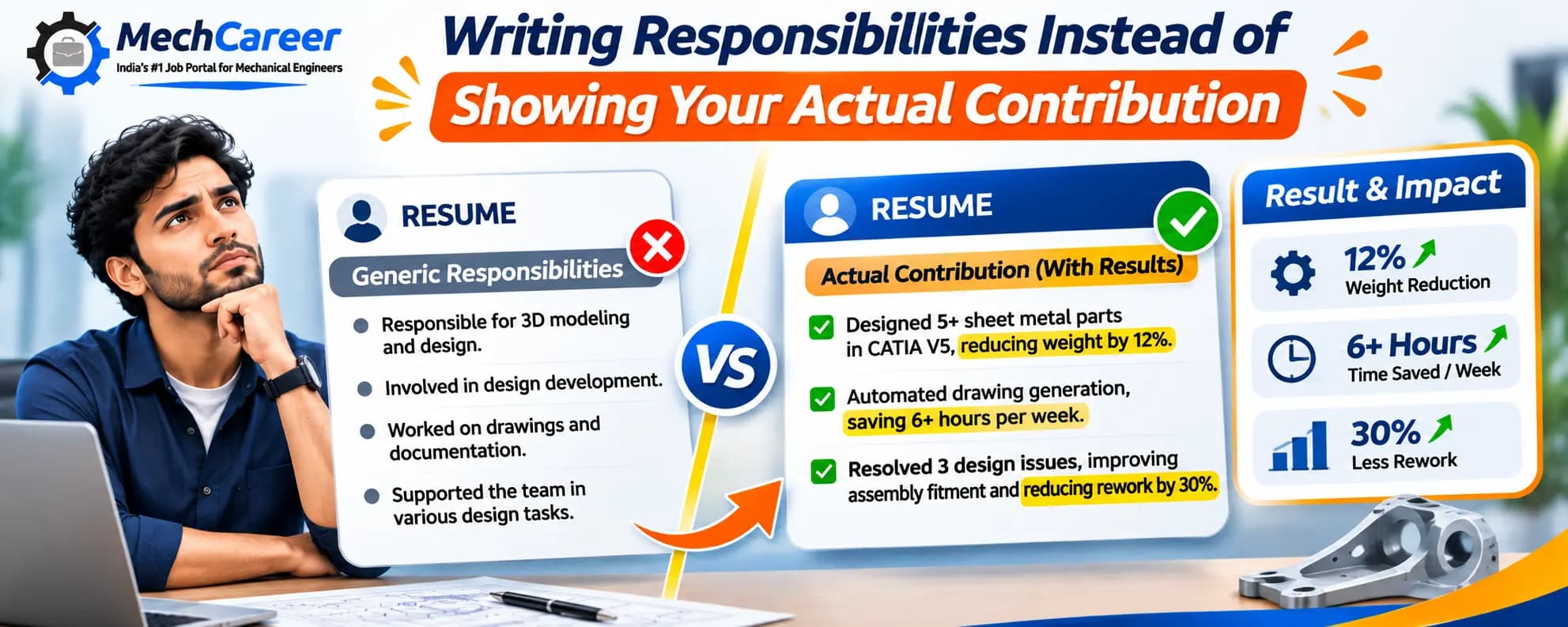
Another common resume mistake is writing job responsibilities without explaining your actual contribution. Statements such as “Worked on mechanical design,” “Handled production activities” or “Responsible for quality inspection” are too broad. They tell the recruiter what department you worked in, but they do not provide enough information about what you personally did.
A stronger resume describes the activity, the tools or methods involved and the engineering objective. For example, instead of writing:
“Worked on mechanical component design.”
you could write:
Designed and modified 3D automotive components using CATIA V5 while considering assembly requirements, manufacturability and engineering drawing specifications.
The second statement provides much more context. It explains the type of work, the software used and the engineering considerations involved.
When writing your experience section, think about the actual work you performed. Ask yourself what engineering task you handled, which software or process you used, what problem or requirement you were working with and what contribution you made to the project.
If you genuinely reduced production time, improved productivity, reduced rejection, completed a certain number of components or contributed to a measurable improvement, mention it. If you do not have measurable results, do not invent numbers. Simply explain your technical contribution clearly.
A strong resume should help the recruiter understand not only where you worked, but also what you actually contributed there.
Your Projects Are Too Generic
For fresh mechanical engineering graduates, projects can be one of the strongest sections of a resume. Since freshers may have limited professional experience, recruiters often use academic projects, internships, technical training and practical assignments to understand their capabilities.
However, many candidates describe their projects in a very basic way.
For example:
Project: Automotive Bracket Design
Software: CATIA V5
This tells the recruiter the project title and software, but it does not explain what the candidate actually did.
A better project description should explain the objective, your contribution, the software used and the engineering considerations involved. For example:
Automotive Bracket Design – CATIA V5: Developed a 3D model of an automotive bracket using CATIA V5, created the required part and assembly models, and considered design, assembly and manufacturability requirements during the modelling process.
Now the project demonstrates practical engineering application rather than simply showing that the candidate completed a project.
The same approach can be used for projects involving automotive components, machine design, sheet metal, plastic product design, press tools, manufacturing processes, automation, FEA or product development.
When writing your project section, explain:
- What was the objective of the project?
- What did you personally work on?
- Which software or engineering method did you use?
- What technical considerations were involved?
- What was the final outcome?
Your project section should answer one important question in the recruiter's mind:
“What can this candidate actually do?”
Share this article

Related Articles
Explore more
CAREER & JOBS
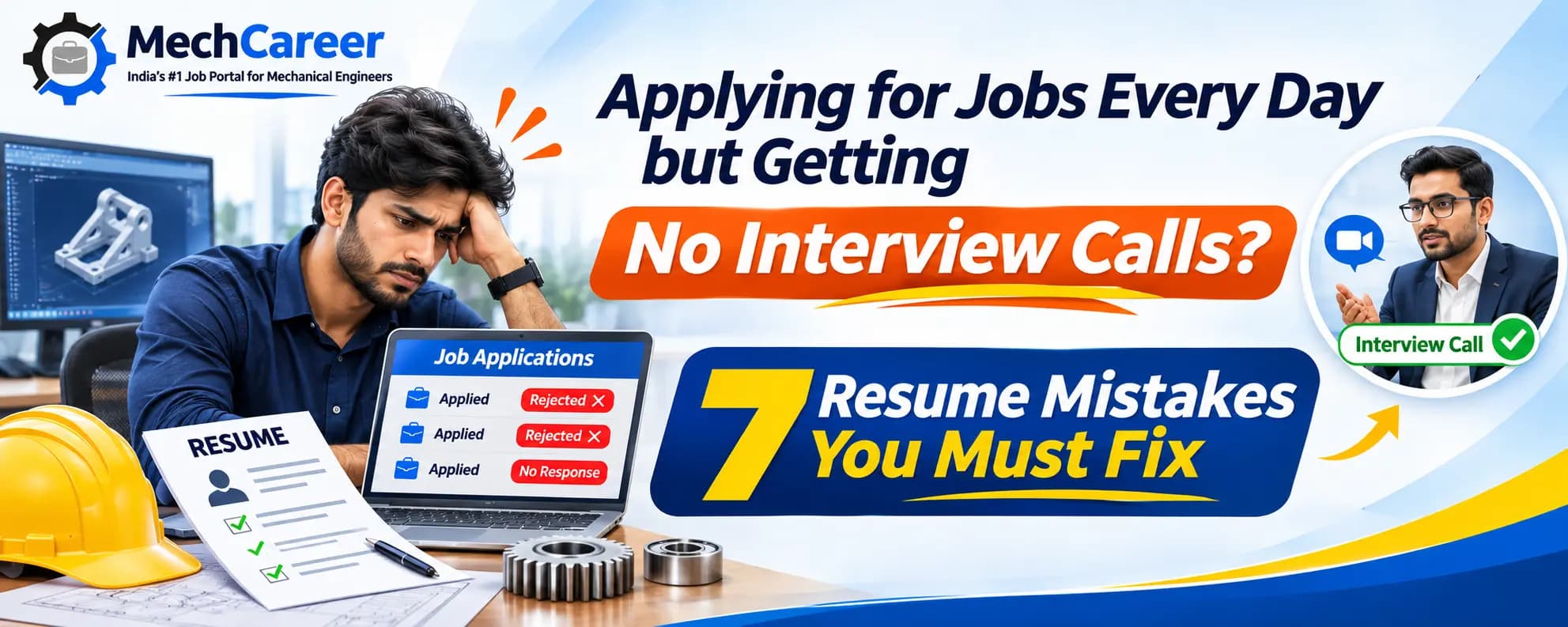
Applying for Jobs Every Day but Getting No Interview Calls? 7 Resume Mistakes You Must Fix

CAREER & JOBS
Are you a Design Engineer with 2-3 years of experience looking for your next career move?

CAREER & JOBS
Mechanical Design Engineers Scope and Demand by MechCareer.com

CAREER & JOBS
How to Excel in a Mechanical Engineering Interview and Secure Your Dream Job
CAREER & JOBS
How to Get a Mechanical Engineering Internship With No Experience

CAREER & JOBS