

 March 1, 2025
 1 min read
Your resume is often the first impression you make on a recruiter. Before an employer discusses your CAD skills, manufacturing knowledge, design experience or engineering projects with you, they will first decide whether your resume is worth a closer look.
For mechanical engineers, this first impression is especially important because the industry offers a wide range of career paths. A Mechanical Design Engineer may need CATIA, NX, Creo, SolidWorks, GD&T and product-development knowledge, while a CAE role may focus on simulation and analysis. Manufacturing, production, quality, R&D and maintenance roles can all require completely different combinations of skills.
That is why a strong mechanical engineering resume should not try to tell your entire career story. It should quickly communicate why your skills, experience and projects are relevant to the job you are applying for
For mechanical engineers, this first impression is especially important because the industry offers a wide range of career paths. A Mechanical Design Engineer may need CATIA, NX, Creo, SolidWorks, GD&T and product-development knowledge, while a CAE role may focus on simulation and analysis. Manufacturing, production, quality, R&D and maintenance roles can all require completely different combinations of skills.
That is why a strong mechanical engineering resume should not try to tell your entire career story. It should quickly communicate why your skills, experience and projects are relevant to the job you are applying for
Start With the Job You Want

Before writing your resume, start with the job description—not the resume template. Carefully read the position and understand what the employer actually needs. Look for the software, technical knowledge, engineering responsibilities, industry experience, and qualifications mentioned in the description. The current MechCareer article also emphasizes understanding the role and tailoring the resume to the position rather than using the same resume for every application.
Suppose a company is hiring for an automotive design position requiring CATIA V5, GD&T, BIW and product development. Those skills should be easy to find in your resume if you genuinely possess them. If you are applying for a CAE position, your simulation, FEA, analysis and validation experience should receive greater attention.This does not mean copying keywords from the job description. It means connecting your real experience with the employer's requirements. Before submitting your application, ask yourself whether the recruiter can understand your suitability for the position within a few seconds.
A targeted resume immediately feels more relevant than a generic resume containing every skill, project and qualification you have ever collected.
Show What You Can Do With Your Technical Skills
Mechanical engineering is a technical profession, so your resume needs to communicate your technical capabilities clearly. But a long list of software names does not automatically prove that you can use them effectively.
Instead of simply writing:
CATIA | SolidWorks | ANSYS | AutoCAD | GD&T | CAD | CAE
show where and how you have applied those skills.
If you mention CATIA V5, connect it with part modelling, surface design, assembly development, or automotive product design. If you mention ANSYS, specify the type of analysis you performed. If you mention GD&T, show how you applied it to engineering drawings or functional design.
Your technical skills may include:
- CAD: CATIA V5, Siemens NX, Creo, SolidWorks, AutoCAD
- CAE: ANSYS, HyperMesh, Abaqus, CFD tools
- Engineering: GD&T, DFM, DFA, product development
- Manufacturing: CNC, casting, forging, sheet metal, injection moulding
- Other: MATLAB, Python, engineering analysis tools
Only include skills that you can confidently explain in an interview.
A recruiter is not impressed by how many software names appear on your resume. They want to know what you can actually do with them.
Turn Projects Into Proof of Your Ability
For freshers and engineers with limited professional experience, projects can become one of the strongest parts of a resume. Academic projects, internships, research work and hands-on engineering projects can demonstrate practical ability when professional experience is limited.But there is a big difference between listing a project and showing the engineering work behind it.
Instead of:
Automotive Bracket Design – CATIA V5
try to communicate the engineering contribution:
Designed and developed an automotive bracket in CATIA V5, considering loading conditions, manufacturability and assembly requirements; refined the geometry based on structural analysis.
The second version tells the recruiter much more about your ability.
Where possible, structure project descriptions around:
Action → Engineering Method → Result
A strong project can demonstrate CAD modelling, design methodology, simulation, manufacturing awareness, testing, optimization or problem-solving without requiring a long paragraph.
For freshers, the goal is not to present an academic project as professional experience. The goal is to show that you have already started applying engineering knowledge to practical problems.
Replace Responsibilities With Impact

One of the easiest ways to make a mechanical engineering resume stronger is to move from what you were responsible for to what you achieved.
Compare these two statements:
Weak:
“I worked on mechanical component design and manufacturing.”
Stronger:
“Developed and modified mechanical components while coordinating with manufacturing to improve design feasibility and reduce production issues.”
The second version gives the recruiter more context about your contribution.
The second version gives the recruiter more context about your contribution.
Whenever the information is genuine and available, use measurable evidence such as:
- Percentage improvement
- Cost reduction
- Weight reduction
- Time saved
- Productivity improvement
- Number of components/projects handled
- Reduction in defects or rework
- Project completion within deadline
You do not need to force numbers into every bullet. If an achievement cannot be quantified, describe the specific engineering impact instead.
This approach also works for internships and academic projects. A fresher may not have major business achievements yet, but they can still demonstrate technical outcomes, design improvements, successful prototypes, analysis results, competition achievements, or project completion.
Your resume should make the recruiter think:
“What did this candidate actually contribute?”
Make the Resume Easy to Read—and Easy to Trust
A technically strong resume can still lose attention if it is difficult to read.Use clear section headings, consistent formatting, concise bullet points, professional typography, and enough white space. Avoid excessive colours, decorative graphics, complicated layouts, or huge blocks of text.
Your resume should make important information easy to locate:
- Contact information
- Professional summary
- Technical skills
- Work experience
- Projects
- Education
- Certifications, where relevant
- Achievements, where relevant
The final step is often overlooked: proofreading.
A spelling mistake in a company name, incorrect software name, inconsistent date, broken formatting, or grammatical error can make a technically capable candidate appear careless. The existing MechCareer article also stresses proofreading and consistent presentation because attention to detail is particularly important in engineering.Before sending your resume, check the technical details as carefully as you would check an engineering drawing.
Your Resume Is Your First Engineering Pitch
A good mechanical engineering resume is not the one with the most information. It is the one that communicates the right information quickly.
Your resume should show a clear connection between the role you want and the value you can bring.If you are a fresher, use projects, internships, technical training, certifications, and academic achievements to demonstrate practical ability. If you have experience, focus more strongly on your contributions, engineering decisions, improvements, and measurable results.
Most importantly, Do not create one generic resume and send it everywhere.
Tailor it. Simplify it. Prove your skills. Show your impact.
A recruiter should not have to search through your resume to understand whether you are suitable for the position.
Your resume has one important job:
Get the recruiter interested enough to give you the interview.
Share this article

Related Articles
Explore more
ENGINEERING TRENDS
Top Skills 5 Employers Look in Mechanical Engineers
ENGINEERING TRENDS
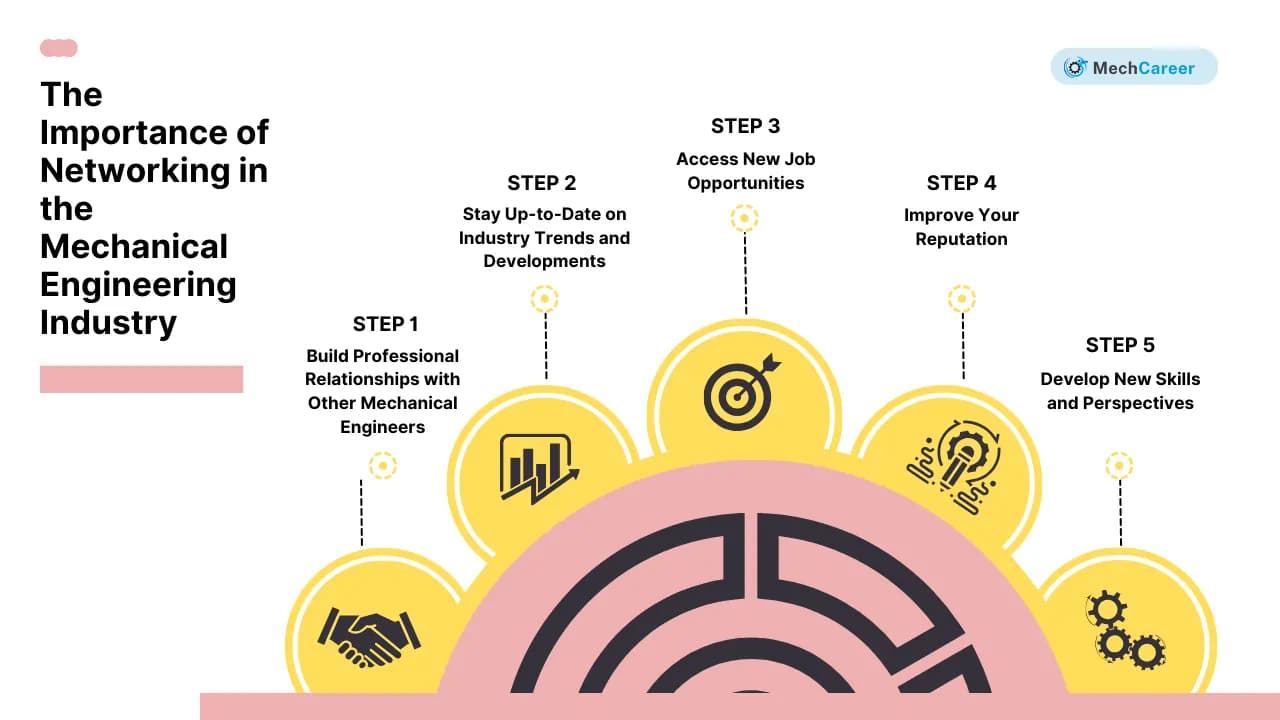
The Importance of Networking in the Mechanical Engineering Industry

ENGINEERING TRENDS
How MechCareer.com Helps Fresher Mechanical Engineers Kickstart Their Career

ENGINEERING TRENDS