
 March 1, 2025
 1 min read
Mechanical engineering offers many career paths, but if you enjoy designing products, solving engineering problems, working with CAD and understanding how things are developed, Mechanical Design and Research & Development (R&D) can be particularly rewarding career directions.
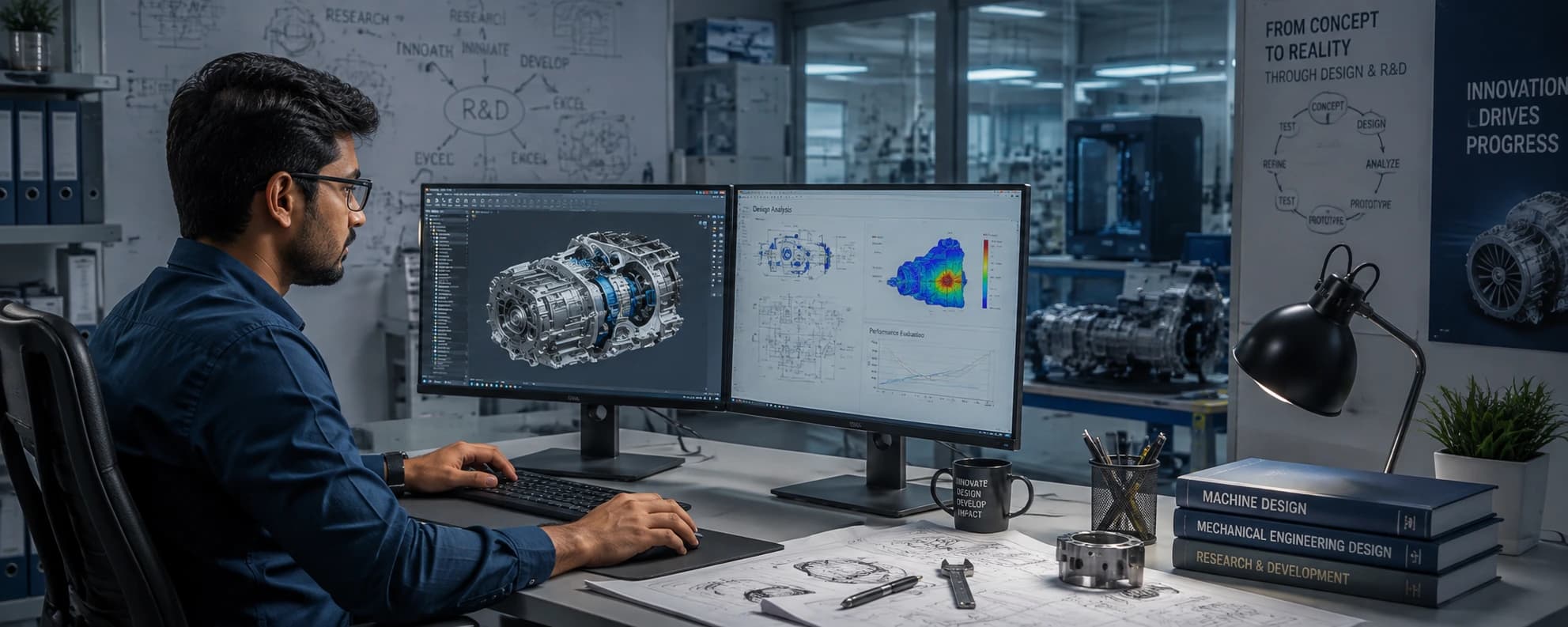
Design and R&D engineers are involved in much more than creating 3D models. They work on concepts, engineering calculations, materials, CAD, simulation, prototyping, testing, manufacturing and continuous product improvement. Their work can influence everything from an individual component to an entire product.
For students, freshers, and mechanical engineers planning their next career move, entering Design or R&D requires more than learning one software package. It requires a combination of engineering fundamentals, practical skills, industry exposure, problem-solving ability and continuous learning.
Know What Design & R&D Engineers Actually Do
Build the Skills Behind Great Engineering
- CAD: CATIA V5, Siemens NX, Creo, SolidWorks
- CAE: ANSYS, HyperMesh, Abaqus, CFD
- Engineering: GD&T, DFM, DFA, tolerance analysis
- Manufacturing: CNC, casting, forging, sheet metal, injection moulding
- Product Development: prototyping, testing, validation, design optimization
Turn Learning Into Real Engineering Experience
- Design methodology
- CAD modelling and assemblies
- Engineering calculations
- Simulation and analysis
- Manufacturing understanding
- Prototyping and testing
- Design improvement and problem-solving
Explore Where Design & R&D Can Take You
- Mechanical Design Engineer
- Product Design Engineer
- R&D Design Engineer
- Product Development Engineer
- Automotive Design Engineer
- CAE Engineer
- Testing & Validation Engineer
- Development Engineer
Build Your Path From Fresher to R&D Professional
You do not need to know everything before starting your career.


Related Articles
Explore more

How to Turn Your Mechanical Skills into a Career in Design and R&D