

 March 1, 2025
 1 min read
- Mechanical engineering is no longer limited to designing components or working with machines. Modern engineering projects involve product development, CAD and simulation, manufacturing, automation, quality, research, and collaboration across multiple departments. As a result, employers increasingly look for mechanical engineers who can combine strong technical knowledge with communication, problem-solving, teamwork and adaptability.
- For students, freshers and experienced professionals, developing the right combination of technical and professional skills can make a significant difference when applying for jobs, attending interviews or progressing in a mechanical engineering career.
Technical Skills: Build the Right Foundation
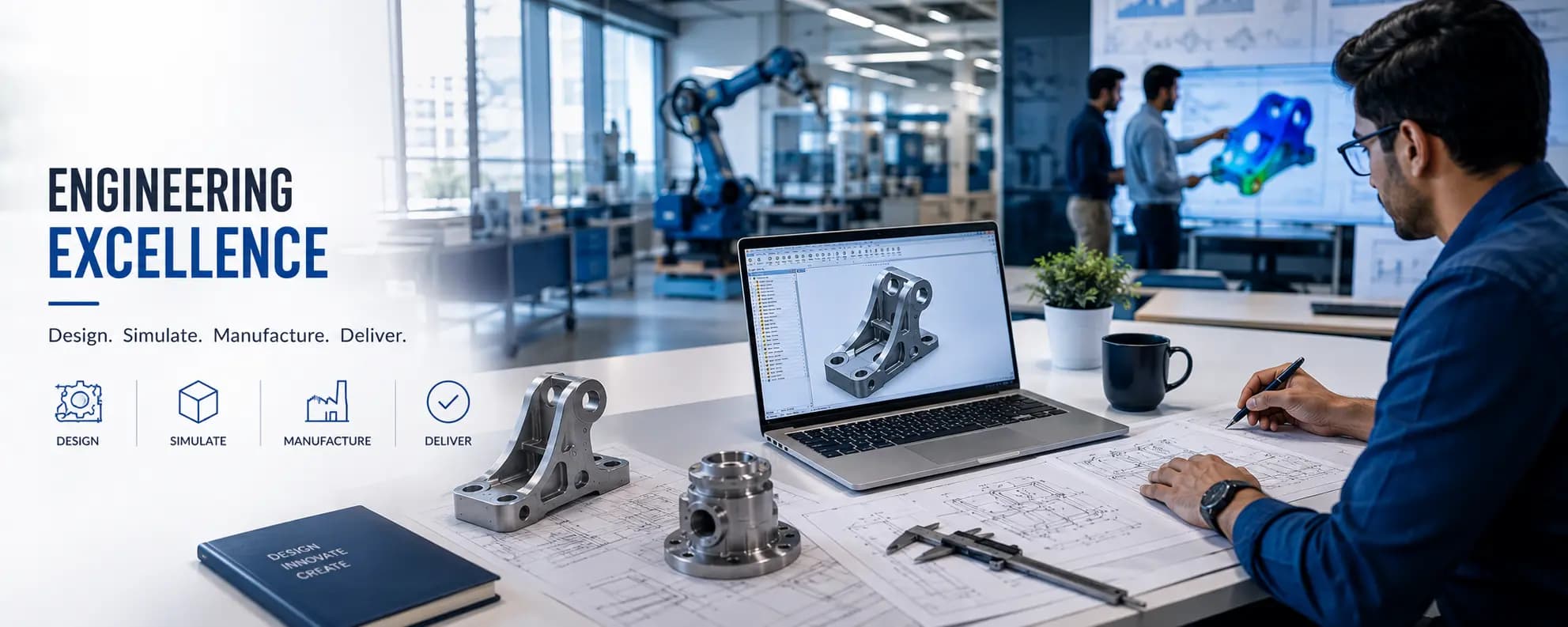
Technical proficiency remains one of the most important qualities employers look for in mechanical engineers. Companies need professionals who understand engineering principles and can apply them to real products, components, machines and manufacturing processes.Depending on the job profile, engineers may work with professional tools such as CATIA V5, SolidWorks, ANSYS and other CAD or CAE platforms. But software knowledge becomes much more valuable when combined with an understanding of engineering drawings, GD&T, materials, manufacturing processes, tolerances and product requirements.
Important technical areas include:
- Mechanical engineering fundamentals
- CAD modelling and assemblies
- Engineering drawings and GD&T
- CAE and simulation
- Manufacturing processes
- Materials and component selection
- Product development and testing
Consider an engineer designing an automotive bracket. Knowing how to create the 3D model is only the beginning. The engineer must also consider loading conditions, material, thickness, manufacturability, tolerances, weight and cost before finalising the design.
Employers therefore value engineers who can explain why a design works, not just how it was created.
Communication: Make Engineering Clear
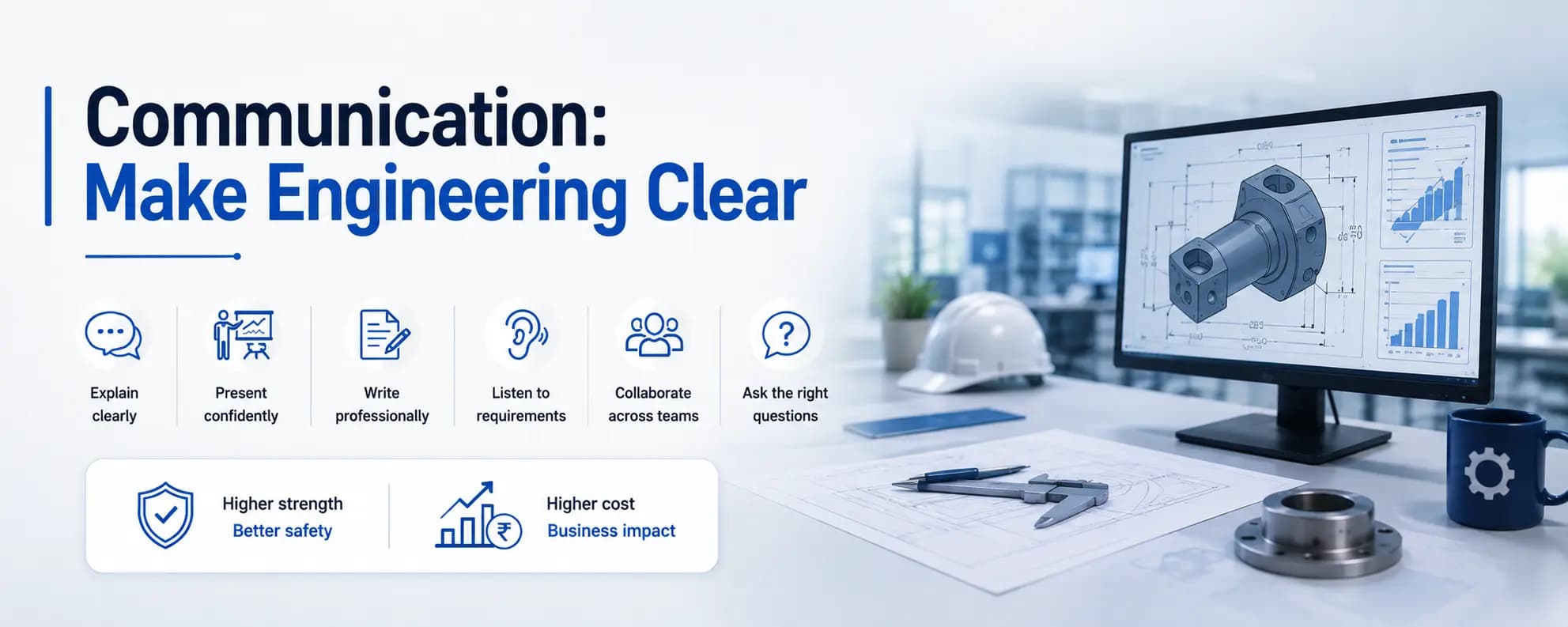
Mechanical engineers rarely work in isolation. A design engineer may need to discuss a component with manufacturing, explain a drawing to a supplier, present simulation results to a project manager or communicate a technical issue to a client.
This makes communication an essential professional skill.Good communication is not about using complicated technical language. It is about explaining an engineering concept clearly to the right audience. An engineer should be able to discuss detailed technical information with another engineer while also explaining its practical impact to a non-technical stakeholder.
Strong communication involves:
- Explaining technical concepts clearly
- Presenting engineering ideas confidently
- Writing professional technical documents
- Listening carefully to requirements
- Communicating with cross-functional teams
- Asking the right questions
For example, if a design change increases component strength but also increases manufacturing cost, the engineer should be able to explain both the technical benefit and the business impact.
A technically strong engineer who cannot communicate decisions effectively may find it difficult to contribute fully to a project.
Problem-Solving: Find the Real Cause
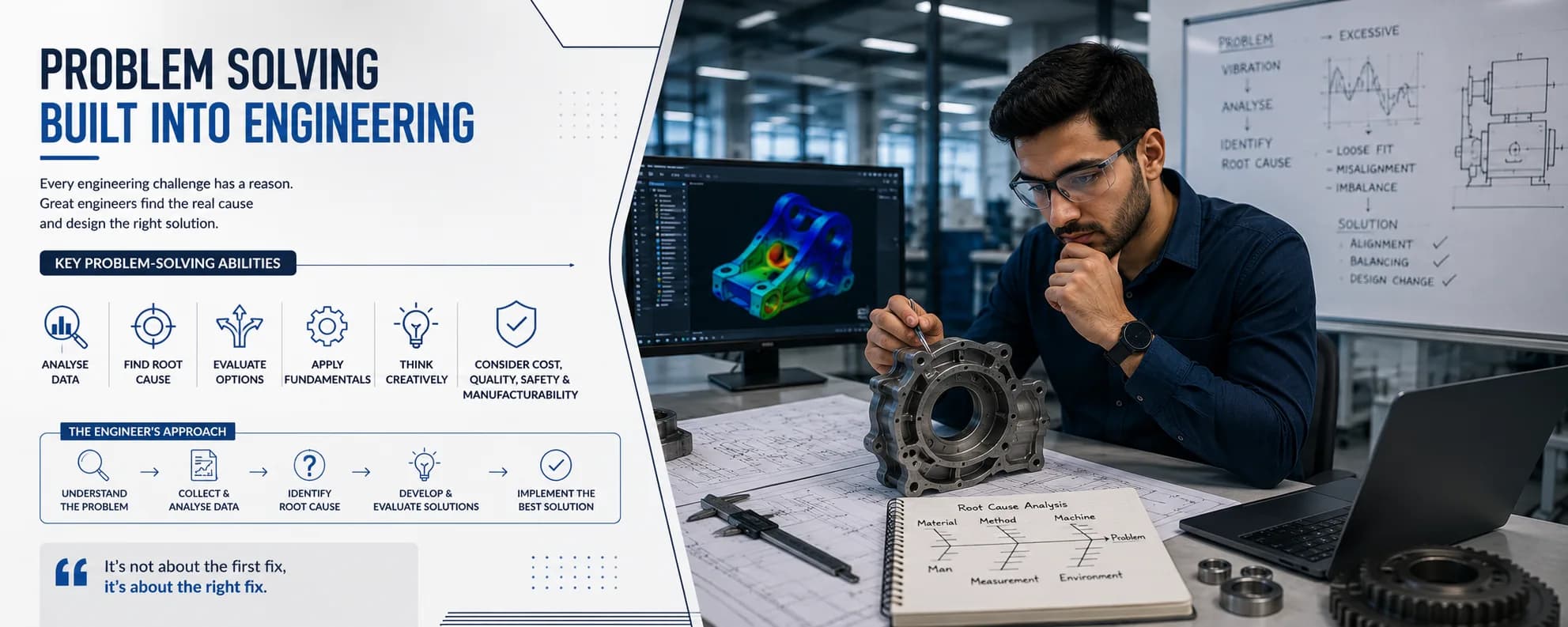
Mechanical engineering is fundamentally a problem-solving profession. Whether an engineer works in design, manufacturing, quality, maintenance, testing or R&D, unexpected problems are part of the job.
A component may fail during testing, a machine may develop excessive vibration, a manufacturing process may produce inconsistent results or a product may become more expensive than expected.
The first solution is not always the best solution.Effective problem-solving requires an engineer to understand the situation, analyse available information, identify the root cause, evaluate possible solutions and select an approach that is technically sound and practically feasible.
Key problem-solving abilities include:
- Analysing engineering data
- Identifying root causes
- Evaluating alternative solutions
- Applying engineering fundamentals
- Thinking critically and creatively
- Considering cost, quality, safety, and manufacturability
For example, if a component fails under load, simply increasing its thickness may solve the immediate problem. A stronger engineering approach is to investigate whether the failure was caused by material selection, geometry, stress concentration, loading conditions, manufacturing defects or incorrect assumptions.That difference between fixing a problem and understanding a problem can significantly increase an engineer's value.
Teamwork: Engineering Is a Collective Effort

Most mechanical engineering projects involve multiple people and departments. A product can move from concept and design to simulation, manufacturing, quality, testing and production before reaching the customer.
Engineers therefore need to work effectively with people who may have different responsibilities, priorities and technical backgrounds.Teamwork involves more than attending meetings. It means sharing knowledge, accepting feedback, taking responsibility for assigned work, supporting colleagues and working toward a common project objective.
Effective teamwork helps engineers:
- Coordinate with different departments
- Share technical knowledge
- Handle changing project requirements
- Resolve technical disagreements professionally
- Support team members
- Contribute toward common project goals
For freshers, teamwork can be demonstrated through academic projects, internships, technical competitions, training projects and previous work experience.
Employers want to see that a candidate can contribute to a team and take responsibility rather than simply complete individual tasks.
Adaptability: Stay Ready for What Comes Next
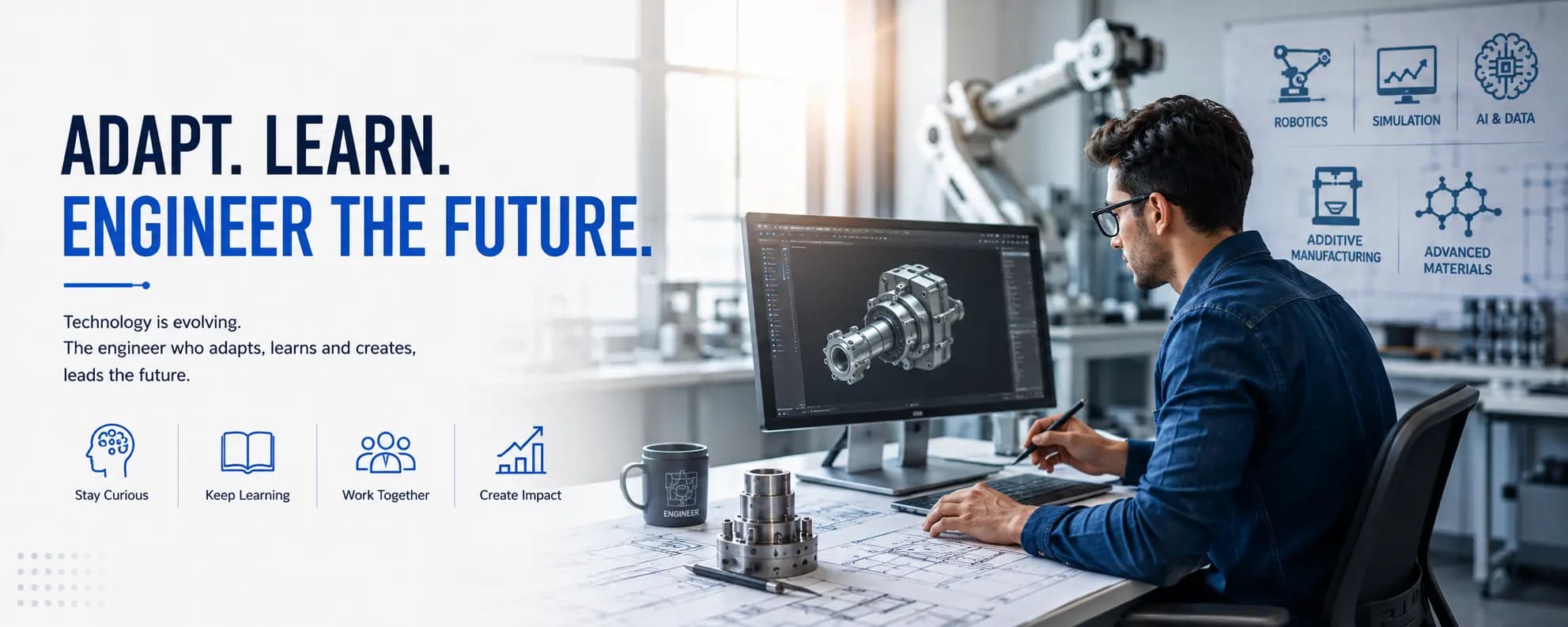
Mechanical engineering is changing rapidly. Electric vehicles, robotics, automation, additive manufacturing, advanced materials, digital twins, simulation, and artificial intelligence are creating new engineering opportunities and changing traditional workflows.This makes adaptability an increasingly important skill.An adaptable engineer does not need to know every emerging technology immediately. What matters is the ability and willingness to learn, understand new tools and apply new knowledge when required.
Engineers can develop adaptability by:
- Learning new engineering software
- Exploring emerging technologies
- Updating technical knowledge
- Adapting to new processes and methods
- Accepting changing project requirements
- Remaining open to new ideas
For mechanical engineering students and freshers, this mindset can be especially valuable. Employers may not expect a candidate to know everything, but they do expect the ability to learn, adapt and apply knowledge.
Building a Strong Mechanical Engineering ProfileTechnical knowledge, communication, problem-solving, teamwork and adaptability become most valuable when they work together.A mechanical engineer may have excellent CAD skills, but if they cannot explain their design decisions, collaborate with manufacturing, or solve unexpected problems, their technical ability may not reach its full potential.When preparing a resume or attending an interview, therefore, do not simply list skills. Demonstrate how you have applied them.
For example, instead of writing:
“CATIA V5 – Good Knowledge”
show how you used CATIA to develop a component, create an assembly, apply design methodology, consider manufacturing requirements and explain the engineering decisions behind the final model.
The same approach can be applied to communication, teamwork and problem-solving. Real examples are more powerful than a list of keywords.
Final Takeaway
Employers are looking for mechanical engineers who can do more than perform technical tasks. They want professionals who can understand engineering problems, communicate ideas, work with teams, develop practical solutions and continue learning as technology changes.For students and freshers, the best time to develop these capabilities is before entering the job market. Build strong engineering fundamentals, gain practical software experience, work on meaningful projects, improve communication, participate in team-based activities and stay curious about emerging technologies.
The goal is not to become an engineer who knows everything.
The goal is to become an engineer who can learn, solve, communicate, collaborate and create value.
Share this article

Related Articles
Explore more
ENGINEERING TRENDS
Top Skills 5 Employers Look in Mechanical Engineers
ENGINEERING TRENDS
The Importance of Networking in the Mechanical Engineering Industry
ENGINEERING TRENDS
How MechCareer.com Helps Fresher Mechanical Engineers Kickstart Their Career

ENGINEERING TRENDS